




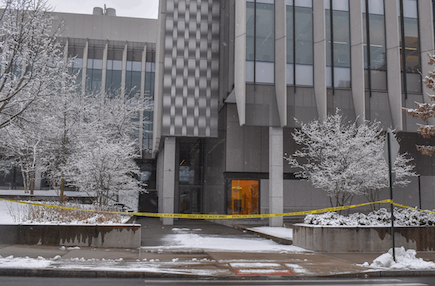

PROVIDENCE — Like untold numbers of people in Rhode Island and beyond, once Linda Hurley learned of the mass shootings at Brown University on Dec. 13, she became what she described as “glued” to the torrent of media reports.
“As in any tragedy of this type, it didn’t feel real for hours and hours,” Hurley, CODAC president and CEO, told Ocean State Stories in an interview. “You’re horrified. You feel sick.”
That it happened in Rhode Island intensified her reaction, Hurley said.
“Emotionally, it just was astounding to me. I grew up outside of Philadelphia. Homicides were reported every day because Philly was the fourth largest city in the country.
“I moved to Rhode Island and actually lived in Providence for several years. Here, homicide is not a regular experience. I got desensitized to it, really. And so [the Brown shootings] almost felt like a home invasion. None of us expected that in Rhode Island.”
Individuals traumatized by the shootings have come to CODAC centers seeking help, Hurley said. Some are people who are not new to trauma.
“Many individuals have experienced violence when they were younger or violence in the country from which they came,” according to Hurley. “We’re looking at assisting people and reminding them of the resilience they’ve built. Ninety-three percent of the people we serve have significant trauma in their lives.”
The shootings have also taken a toll on some staff members, Hurley said.
In interviews earlier this month, two Brown University Health professionals shared their insights with Ocean State Stories.
“First and foremost, we just want to acknowledge that it was a horrific act and incident that people experienced,” said Dr. Deidre L. Donaldson, clinical director of Gateway Healthcare’s Child & Family Outreach & Healthy Transitions programs.
“After a traumatic event like this, there are going to be emotions, thoughts, and physical reactions that can really feel very disorienting and overwhelming” said Dr. Russ Marks, staff psychologist in the Trauma Track Partial Hospital Program.
Immediate reactions to the shootings may not be the long-term reactions, Marks and Donaldson agreed.
“Time is really important here because when something like this happens, how each individual experiences it is really going to somewhat determine how it plays out over time,” Donaldson said. “Responses are very individualized and families need to be aware of that. Even within the same family, there can be different meanings of the trauma for each of the individuals in the family.
“And certainly your age [influences] how you understand the trauma and what it means to you or how you make sense of it. So I think this issue about how you cope at any particular or given time afterward is a very important one because there’s the nature of it being individualized.
"[The Brown shootings] almost felt like a home invasion. None of us expected that in Rhode Island.”

“Time is really important here because when something like this happens, how each individual experiences it is really going to somewhat determine how it plays out over time."