




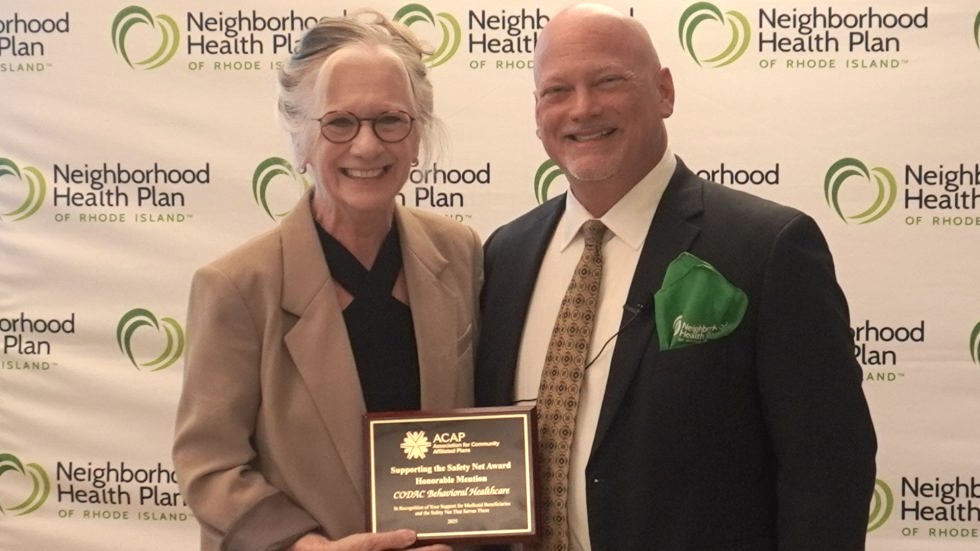
Neighborhood Health Plan of Rhode Island (Neighborhood) celebrated CODAC Behavioral Health Care for earning an Honorable Mention in the Association for Community Affiliated Plans’ (ACAP) Supporting the Safety Net Award. Neighborhood, an ACAP member, nominated CODAC for an award for all its work removing barriers to care.
The Supporting the Safety Net award recognizes a community-based organization or individual whose work goes beyond the norm by developing and applying innovative practices to address the medical, behavioral, or social needs of high-risk populations in their service area. The services provided by award recipients are recognized as best practices that serve as models for replication within the safety net environment.
Neighborhood President and CEO Peter Marino presented a plaque to CODAC President and CEO Linda Hurley at Neighborhood’s Smithfield headquarters. “Neighborhood is fortunate to have CODAC as a partner,” said Marino. “The organization and its staff set a high standard for health care delivery and serve as a model for others.” He added, “The work the agency does to support behavioral health and medical needs is commendable.”
When accepting the award at Neighborhood’s headquarters, Hurley thanked the organization for its ongoing support of CODAC’s mission.
“Recognition from health insurers and their national affiliated organizations goes a long way in reducing the stigma associated with opioid treatment and other behavioral health issues,” Hurley said. “We are fortunate in Rhode Island to have a partner in Neighborhood that is equally committed to taking care of the most vulnerable individuals in our state.”
“Neighborhood’s track record of extraordinary achievement and success wouldn’t be what it is without the partnerships they have nurtured with allied organizations in and around Rhode Island,” said ACAP CEO Margaret A. Murray. “We’re delighted to recognize CODAC today for their efforts and for their support of Neighborhood.”
"Neighborhood is fortunate to have CODAC as a partner."

“Recognition from health insurers and their national affiliated organizations goes a long way in reducing the stigma associated with opioid treatment and other behavioral health issues."