

When CODAC Behavioral Healthcare, the main provider of treatment services for corrections in Rhode Island, looks at its clientele with opioid use disorder(OUD), Vivitrol (depot naltrexone) is preferred by no one. The patients want either methadone or buprenorphine, CODAC CEO Linda Hurley explained in a webinar this month (for the first part of this two-part article, see ADAW (https://onlinelibrary.wiley.com/doi/10.1002/adaw.34254).
Brown University manages all of the data and outcomes for CODAC, which bid on the $2 million contract from the state’s Department of Corrections to provide treatment. Brown is a subcontractor. So, the evidence is being gathered on a regular basis. Recent incarceration is a well known risk factor for overdosing— twice as many overdose death victims were recently incarcerated, Hurley explained. Their tolerance had gone down during incarceration if they had not received medications during treatment; when they get out of prison, they go back to their regular dose on the street, not recognizing that they need less, and also not recognizing that the illicit fentanyl supply on the street is deadly.
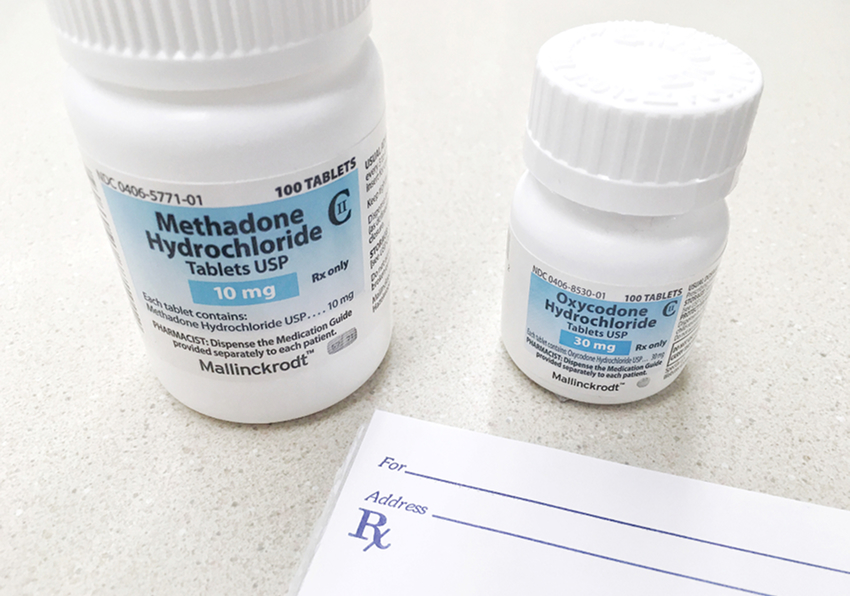
In Rhode Island, 50% of inmates awaiting trial are released within six days. This means that in order to be an effective intervention, treatment needs to be started immediately. Methadone for severely addicted patients should be started, said Hurley; for those with less severe OUD, buprenorphine will be effective. The goal is not only to prevent withdrawal, but to treat OUD with maintenance agonist medication that lasts during and after incarceration.
But it’s essential to help inmates as soon as they are committed, by having methadone and buprenorphine available. “Time is of the essence,” says Hurley. Few prisons and jails provide treatment (see bottom lead). Hurley said she doesn’t understand it.“You could get sued if you don’t do this,” she warns corrections departments.
“This is going to happen anyway,” she said. Some sheriffs have been unwillingly forced into it. Inmates have died under their watch, from withdrawal symptoms — dehydration from vomiting and diarrhea (see ADAWhttps://onlinelibrary.wiley.com/doi/10.1002/adaw.30666). But it doesn’t need to be such a momentous decision. “We can say this over and over, it’s just more medicine for a disease that many of us have,” said Hurley. “It’s also a medical decision.”
For people in prison and jail, CODAC provides treatment until release and referral to a community treatment provider.
Some corrections officials prefer the Sublocade version of buprenorphine, an injectable longterm medication, which means that diversion is not possible (unlike oral buprenorphine). But cost is a factor. “If everyone wanted Sublocade, we wouldn’t be able to afford it,” said Hurley.
Vivitrol (depot naltrexone) is also expensive. But it’s not something anyone wants, said Hurley. The reason may be that detoxification is required first — there can be no opioids in the body when treatment starts or the medication will provoke severe withdrawal symptoms. “We don’t have anyone on depot naltrexone. It’s not a medication that when people are left to choose, they will request,” said Hurley.
Hurley detailed the need for medications for OUD in prisons and jails.
Currently, 56% of CODAC patients take methadone, 32% take sublingual (oral) buprenorphine, and 12% take Sublocade (injectable buprenorphine). No one takes naltrexone.
It’s important to have culturally appropriate treatment, said Hurley. At CODAC, peers are important. The key is to provide MAT services without stopping or interrupting treatment due to the length of treatment. For this, CODAC with RIDOC has built a Recovery-Oriented System of Care with the following utilization of peer recovery specialists:
Of CODAC program staff, one third are bilingual/bicultural. And outside volunteers host Alcoholics Anonymous and Narcotics Anonymous meetings inside RIDOC facilities.
The CODAC RIDOC program has provided important lessons that can be share with other providers in the criminal justice and treatment communities:
The basic rule to remember is to be practical: “Start where you can and focus on program sustainability.” The essentials for success of MAT for incarcerated individuals are:
These essentials apply to corrections staff as well as treatment staff. And Hurley stressed that flexibility is key.
In Rhode Island, 50% of inmates awaiting trial are released within six days. This means that in order to be an effective intervention, treatment needs to be started immediately.
Currently, 56% of CODAC patients take methadone, 32% take sublingual (oral) buprenorphine, and 12% take Sublocade (injectable buprenorphine). No one takes naltrexone.
The basic rule to remember is to be practical: “Start where you can and focus on program sustainability.”